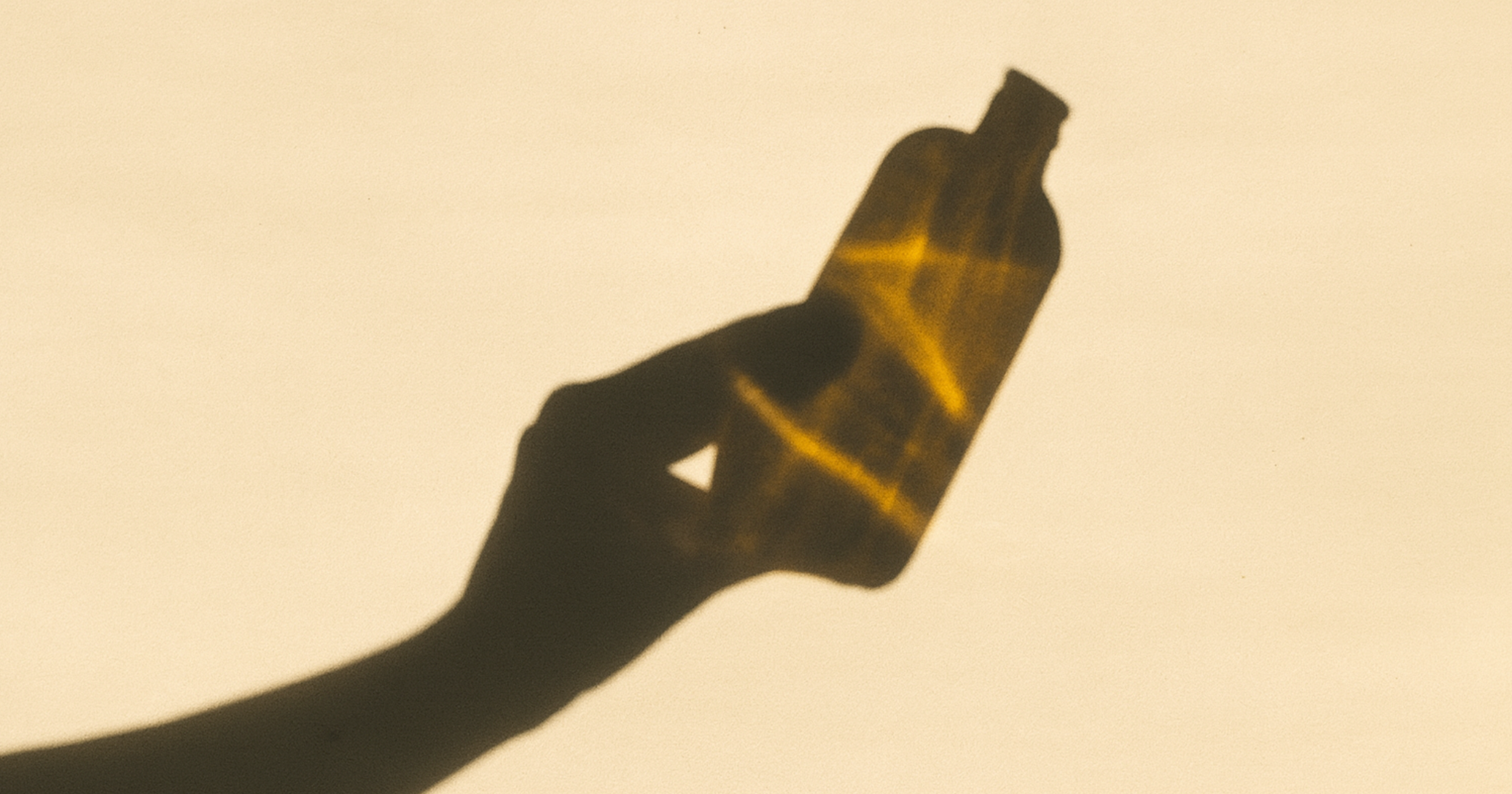
The story is self-reported. The shadow is evidence.
Stories are controllable. Shadows aren't.
You can hire a top agency, tighten the copy, refresh the logo, and roll out a new values campaign. You can declare that you're:
Human-Centered
Innovative
Community-Focused
Premium
That's self-reporting.
Your shadow is different. It's the unedited version of your brand:
That's self-reporting.
Your shadow is different. It's the unedited version of your brand:
How you respond when a big customer or an investor pressures you to bend
How you treat your team when there's no culture video being shot
Who gets grace and who gets quietly discarded when mistakes are made
Which customers you bend over backwards for, and which ones you let walk all over your team
Your shadow is the residue of your decisions.
You can't spin it. A rebrand won't hold it.
You can only notice it, own it, and change it, or pretend it isn't there.
The world is drowning in brand stories.
People aren't reading your script.
They're reading your shadow.
The Say-Do Gap™: where trust leaks out.
Most founders and CEOs feel the tension before they can name it.
"We're not telling our story well enough."
"Our marketing isn't capturing who we really are."
"Our brand just isn't landing."
Maybe. But often the story is more accurate than you want to admit.
The problem isn't volume. The company says more than it does.
You say you care about people.
But your policies reward the ones who burn out quietly.
You say quality comes first.
But your suppliers were picked on price.
You say you're different from everyone in your category.
But your pricing, your pitch and your hiring look exactly like theirs.
That's the Say-Do Gap™: the distance between what you say and what people actually experience.
When the gap is wide, people feel betrayed.
When the gap is narrow, people feel oriented.
When the gap disappears, people feel trust.
Not excitement. Not hype. Trust.
And trust is the only real brand equity you have.
Not awareness. Not aesthetics.
Not a clever narrative.
Trust.
Your guiding belief is what shapes the shadow.
Your shadow doesn't come from a positioning statement.
It comes from your guiding belief.
A guiding belief is singular.
It's what the founder knows about the world that needs to change, and what the company does about it.
It's not a list of values.
Not a mission paragraph.
Not a tagline.
Nike: If you have a body, you are an athlete.
Dove: Beauty should be a source of confidence, not anxiety.
Each is one sharp sentence about the world.
Everything else, from purpose and vision to values and offerings, is that belief put to work.
Belief-driven brands don't start with, "How do we stand out?"
They start with, "What do we know about the world that we are willing to reorder our business around?"
That belief shows up in places your brand guide never touches:
The vendor you walk away from because their practices violate what you stand on
The product you kill because it would grow revenue but erode what you're trying to change
The investment you decline because it comes with strings that blunt your conviction
The "high performer" you finally let go because their behavior contradicts your belief
Think of the brands you instinctively trust.
It's not because their story is louder.
It's because their shadow is consistent with a clear belief.
Those shadows aren't accidents.
They're one guiding belief, expressed as costly, operational choices.
Marketing can't hold what the top won't.
When your brand "isn't landing," the reflex is to call marketing.
New campaign. New story. New platform.
New way to "get our message out there."
But if your shadow doesn't match your story, no campaign will hold.
Branding is not primarily a communications exercise.
It's a reflection exercise.
Your brand is a reflection of:
What you actually reward
What you actually tolerate
What you actually protect, especially when it costs you
Marketing doesn't control those things.
Leadership does.
If you're the founder or CEO, this is on you.
You are the light source.
Your company is the object.
Your brand is the shadow.
If you keep changing the story while protecting the same behaviors, you don't have a brand problem.
You have a courage problem.
If the story went silent tomorrow.
Here's a simple way to see your shadow clearly.
Imagine tomorrow:
Your website goes dark
Your socials freeze
Your decks, scripts, and talking points disappear
No tagline. No campaigns. No case studies.
What would still be true?
What would your team say you stand on, based only on how you've led them?
What would your customers describe, based only on how you've treated them?
What would your partners and vendors assume you value, based only on the decisions you've made?
That's your brand.
Whatever remains when the story goes silent is the only part you can really trust.
Some founders find something solid there: a spine, a belief, a throughline.
Others discover a pile of borrowed phrases and broken promises.
The difference isn't strategy.
It's one guiding belief, expressed as behavior.
How to start closing your Say-Do Gap.
You don't close the gap with a new narrative.
You close it with new choices grounded in a real belief.
Try this:
Write down what you currently call your belief.
If it starts with "We" and sounds like a value ("We care about people." "We put customers first." "We're radically inclusive."), it's probably a label, not a belief.
Rewrite it as one clear statement about the world that needs to change.
For example:
"Work is crushing people's humanity, so we design around human limits even if it slows our growth."
"Power keeps drifting away from the margins, so we put real authority in the hands of those closest to the pain."
"Belonging shouldn't require editing yourself to fit in, so we remove every barrier that makes people feel they have to perform to stay."
Now you have the shape of a guiding belief.
Ask: Where is this belief currently costing us something?
A client.
A policy.
A hire.
A budget line.
A schedule.
A relationship.
If the answer is "nowhere," it's not a belief.
It's a slogan.
Choose one decision this week that you will let this belief reshape.
Change a policy.
Move a meeting.
Rework a metric.
Have the hard conversation you keep punting.
Then watch what happens to your shadow.
Not out in the market. In the room.
The temperature shifts.
People sit up.
Skeptics get curious.
Your team starts to believe you, not because you said it better, but because you finally did it.
Your story still matters. It gives people words for what they're already experiencing.
But the story is not the point.
The story is the script.
Your brand is the shadow.
If you want more trust, don't start by rewriting the script.
Stand in the light, name your guiding belief, and begin closing the distance between what you say and what you do.
That's where a company becomes believable.